Stimulation That Addresses Mood Disorders Mechanically
TMS in El Paso for adults with depression, OCD, or anxiety who need an alternative to medication escalation
Transcranial magnetic stimulation uses focused magnetic pulses to depolarize neurons in specific cortical regions, most commonly the dorsolateral prefrontal cortex in cases of major depressive disorder. NeuroWave TMS, LLC delivers this therapy to patients whose symptoms have not responded adequately to two or more antidepressant trials or who cannot tolerate the side effects of pharmacologic treatment. The process does not involve surgery, does not require sedation, and does not produce the cognitive side effects associated with electroconvulsive therapy.
The magnetic field generated by the coil passes through the skull without resistance and induces an electrical current in the underlying cortical tissue, which triggers action potentials in neurons that have become hypoactive in depressive states. Over repeated sessions, this stimulation helps restore normal activity levels in brain circuits responsible for mood regulation, decision-making, and emotional response. The FDA has cleared TMS for major depressive disorder and obsessive-compulsive disorder, and clinicians use the therapy off-label for conditions including generalized anxiety disorder, PTSD, bipolar depression, chronic pain syndromes, fibromyalgia, tinnitus, addiction, and migraine.
Arrange a consultation to review your diagnosis, medication history, and whether TMS fits your current treatment plan.
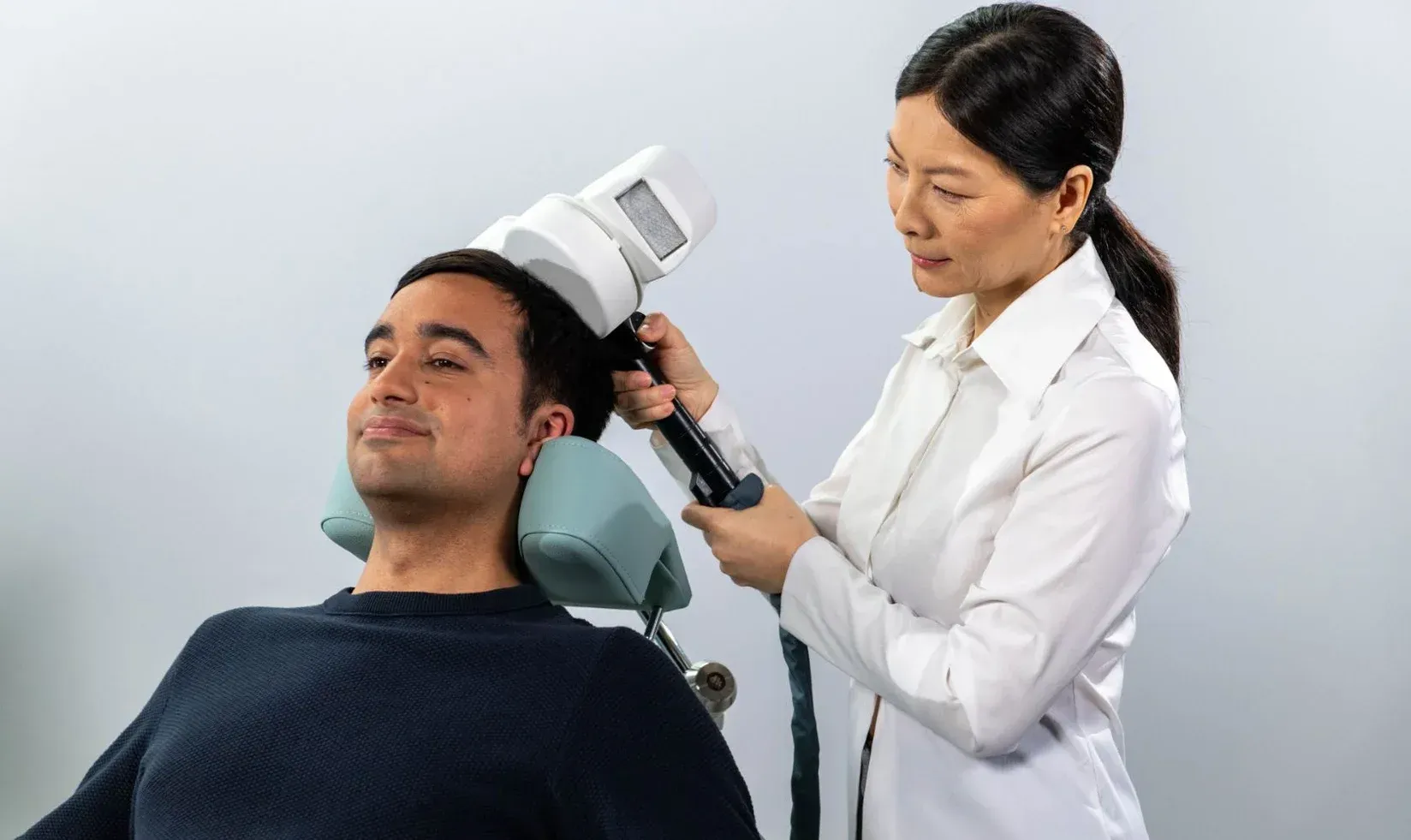
During a session, you sit in a reclining chair while a technician positions the TMS coil against your scalp using anatomical measurements to locate the target region. The device delivers magnetic pulses in sequences called pulse trains, each lasting a few seconds, followed by brief rest intervals. Most patients describe the sensation as a tapping or knocking feeling on the scalp, and the sound of the coil firing resembles a woodpecker. Sessions typically last twenty to thirty minutes, and you remain awake and alert throughout.
After several weeks of daily treatment, patients often notice they no longer wake up with the same weight of dread, that decision-making feels less paralyzing, and that interactions with family or coworkers no longer require the same level of forced effort. Energy levels improve, and activities that had lost all appeal begin to register as neutral or mildly enjoyable again. Sleep architecture normalizes, and the intrusive thought patterns common in OCD or anxiety disorders diminish in frequency and intensity.
The standard protocol involves five sessions per week for four to six weeks, though some patients respond earlier and others require extended courses. You can drive yourself to and from appointments, return to work immediately after each session, and continue taking any medications or attending therapy without interruption.
Answers to Common Questions About TMS
These questions address safety, logistics, and how TMS compares to other treatment options.
What does the treatment feel like during the session?
You feel a rhythmic tapping sensation on your scalp where the coil makes contact, and you hear a clicking sound each time the magnetic pulse fires, but there is no pain in the traditional sense and no sensation deeper inside the head.
How long do results last after finishing the initial treatment course?
Many patients maintain symptom relief for six months to a year, and some experience longer remission periods, though maintenance sessions may be needed if depressive symptoms begin to return.
Can I continue taking antidepressants during TMS treatment?
Yes, and many patients do, as TMS works through a different mechanism than medication and the combination can produce better outcomes than either approach alone.
What disqualifies someone from receiving TMS?
Metal implants in or near the head, a history of seizures, or certain medical devices like cochlear implants can prevent treatment, which is why a medical screening is required before starting.
How does insurance coverage work for TMS in El Paso?
Most major insurers cover TMS for major depressive disorder after a patient has tried and failed a certain number of antidepressant medications, and we verify benefits before scheduling treatment.
NeuroWave TMS, LLC offers TMS for patients in El Paso who meet diagnostic and treatment history criteria. Contact the office to begin the eligibility review process.